
An Index of Clean Slate Laws
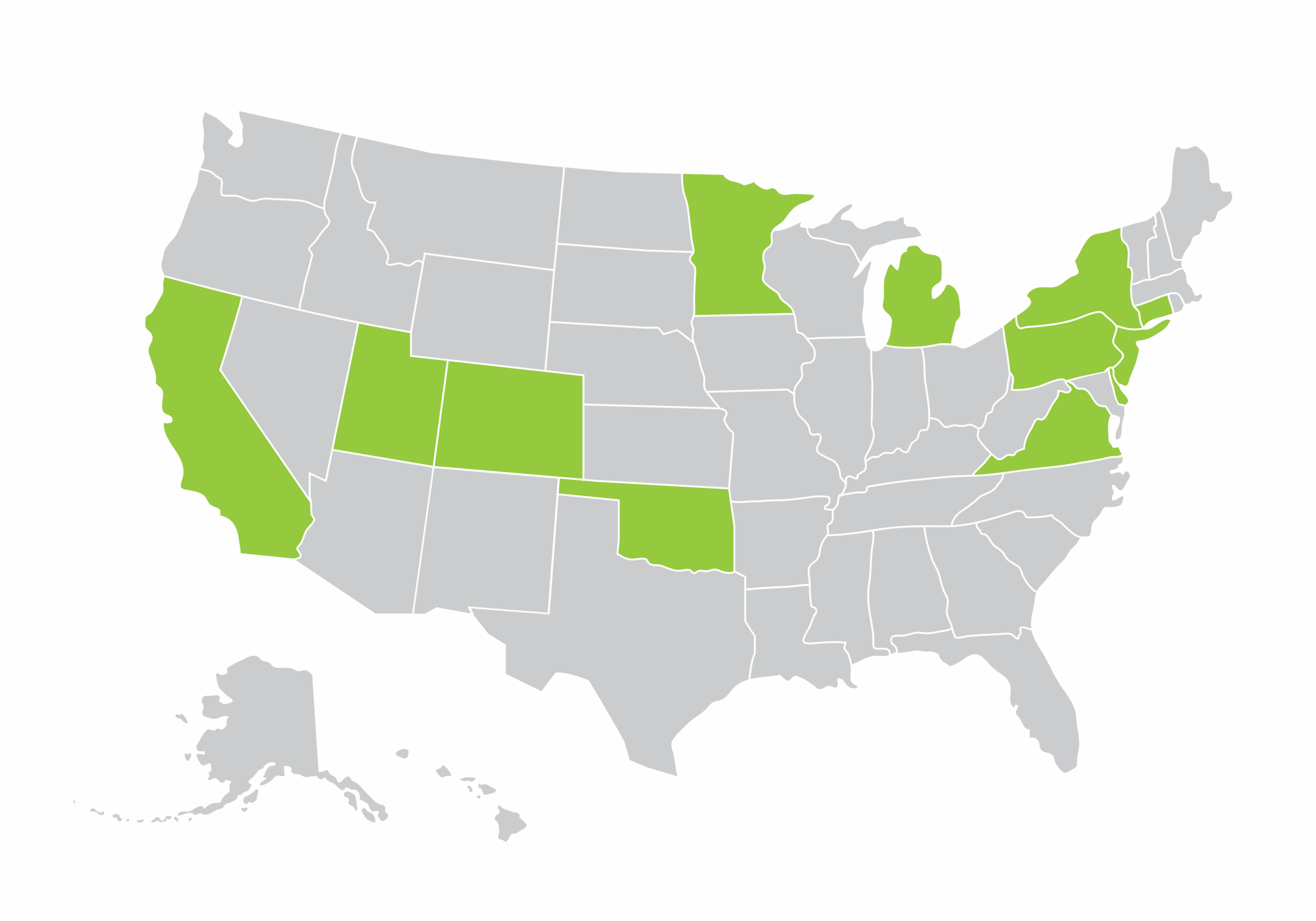
Clean slate laws are state-level rules that limit how past criminal records appear to employers, landlords, licensing boards, and the public.Depending on the state, these laws can automatically seal or expunge certain convictions and arrests after a defined waiting period, or they can create a streamlined petition process so eligible people can ask a court to clear their records. Importantly, eligibility, waiting periods, and which offenses qualify vary widely from state to state, and some records (for example, certain sexual offenses or recent convictions) are frequently excluded.
This page gives a clear, state-by-state guide to the Clean Slate landscape across the United States. Use it to quickly compare where and how clean-slate protections apply
California
California seals most eligible misdemeanor and some felony convictions automatically once waiting periods and supervision requirements are satisfied.
Automatic Relief
- Felonies sealed 4 years post-release, if no new offenses occur
- Misdemeanors sealed immediately upon completion of probation or 1 year after release if jail time was served
Not Eligible
- Serious felonies
- Violent felonies
- Offenses requiring sex offender registration
Statute: SB 731
https://leginfo.legislature.ca.gov/faces/billTextClient.xhtml?bill_id=202120220SB731
Colorado
Colorado automatically seals select convictions after a waiting period following payment of restitution.
Automatic Relief
- Misdemeanors sealed 7 years after final disposition
- Eligible felonies sealed 10 years after sentence completion
Not Eligible
- Serious felonies
- DUI/DWI
- Sexual offenses
- Felony abuse offenses
- Crimes listed under the Victim’s Rights Act (VRA)
Statute: SB22-099
https://leg.colorado.gov/bills/sb22-099
Connecticut
Connecticut provides automatic erasure of misdemeanors and select felony convictions, subject to a waiting period.
Automatic Relief
- Misdemeanors erased 7 years from the date of conviction
- Eligible felonies erased 10 years from the date of conviction
Not Eligible
- Family violence offenses
- Sex offenses
- Serious felonies
- Certain firearm offenses
Statute: Public Act 21-32
https://www.cga.ct.gov/2021/ACT/PA/pdf/2021PA-00032-R00SB-01019-PA.pdf
Delaware
Delaware offers automatic expungement of select misdemeanor and non-violent felony convictions.
Automatic Relief
- Eligible misdemeanors after 5 years
- Select non-violent felonies after 10 years
- Cases without a disposition dismissed after 7 years of inactivity
Not Eligible
- Domestic violence offenses
- Crimes involving minors or vulnerable adults
- Serious misdemeanors and felonies
Statute: SB111
https://legis.delaware.gov/BillDetail/58578
Michigan
Michigan’s Clean Slate law allows automatic setting aside of many misdemeanors and up to two felony convictions.
Automatic Relief
- Up to 2 felony convictions automatically set aside 10 years after satisfying sentencing
- Unlimited low-level misdemeanors and up to 4 higher-level misdemeanor convictions automatically set aside 7 years after satisfying sentencing
Not Eligible
- Human trafficking
- Most sex crimes
- Murder
- Most assaultive crimes
Statute: Public Act 193 of 2020
https://www.legislature.mi.gov/documents/2019-2020/publicact/htm/2020-PA-0193.htm
Minnesota
Minnesota automatically expunges eligible misdemeanor and felony convictions after short waiting periods.
Automatic Relief
- Petty misdemeanors automatically expunged 2 years from the date of conviction
- Gross misdemeanors automatically expunged 3 years from the date of conviction
- Eligible felonies automatically expunged 5 years from the date of conviction
Not Eligible
- Domestic violence
- Sexual offenses
- DUIs
- Other specified exclusions
Statute: Minnesota Clean Slate Act (2023)
https://www.revisor.mn.gov/laws/2023/0/Session+Law/Chapter/52/
New Jersey
New Jersey automatically seals/expunges eligible cases after a waiting period.
Automatic Relief
- 10 years from last conviction, plus completion of all fines, fees, parole, and probation
- Expedited relief for select marijuana offenses
Not Eligible
- Homicide
- Kidnapping
- Sexual offenses
- Robbery
- Arson
- Child welfare offenses
- Terrorism
- Abuse of public office
- Various drug offenses
Statute: N.J.S.A. 2C:52-5.4
https://law.justia.com/codes/new-jersey/2022/title-2c/section-2c-52-5-4/
New York
New York automatically seals eligible convictions after a waiting period.
Automatic Relief
- Felonies sealed 8 years from the date of conviction
- Misdemeanors sealed 3 years from the date of conviction
Eligibility Requirements
- Cannot have a pending criminal case
- Must not be on probation, parole, or post-release supervision
Not Eligible
- Sex offenses
- Most Class A felonies
Statute: New York Clean Slate Act
https://www.nysenate.gov/legislation/bills/2023/S7551
Oklahoma
Oklahoma provides automatic expungement of dismissed charges and certain non-violent convictions.
Automatic Relief
- Dismissed/arrest-only cases are immediately expunged
- Misdemeanors expunged 5 years after completion of sentencing
- Non-violent felonies expunged 7 years after completion of sentencing
Eligibility Requirements
- Cannot have a pending criminal case
- Cannot have any felony convictions on their record
Not Eligible
- Violent felonies
- Offenses requiring sex-offender registration
Statute: HB 3316
https://www.oklegislature.gov/BillInfo.aspx?Bill=hb3316&Session=2200
Pennsylvania
Pennsylvania automatically seals eligible convictions after a waiting period.
Automatic Relief
- Misdemeanors automatically sealed 7 years from the date of conviction
- Felonies automatically sealed 10 years from the date of conviction
Not Eligible
- Offenses involving danger to the person
- Offenses against the family
- Firearm offenses
- Sex offenses
- Cruelty to animals
- Corruption of minors
Statute: Act 36 of 2023
https://www.palegis.us/statutes/unconsolidated/law-information/view-statute?txtType=PDF&SessYr=2023&ActNum=0036.&SessInd=0
Utah
Utah automatically expunges eligible misdemeanors after a waiting period; the waiting period is determined by the offense classification
Automatic Relief
- Misdemeanor convictions for possession of controlled substances are automatically expunged 7 years from the date of adjudication
- Class B misdemeanor convictions are automatically expunged 6 years from the date of adjudication
- Class C misdemeanor convictions are automatically expunged 5 years from the date of adjudication
Eligibility Requirements
- No prosecutorial objection
- No pending cases or incarceration
- No outstanding state debt
Not Eligible
- Capital felonies
- Class 1 felonies
- Violent felonies
- Felony DUI
- Sex offenses
- Child abuse
- Domestic violence
- Several additional listed crimes
Statute: Utah Code 77-40a
https://le.utah.gov/xcode/Title77/Chapter40A/77-40a-P2.html?v=C77-40a-P2_2024100120240501
Virginia
Starting July 1st, 2026, Virginia will offer narrow automatic sealing for specific misdemeanor convictions
Automatic Relief
- 7 years after conviction for listed misdemeanors
Eligible Offenses
- Petit larceny
- Concealment/shoplifting
- Trespassing
- Entering property to damage/interfere
- Refusal to leave church
- Pre-2021 marijuana possession
- Disorderly conduct
Eligibility Requirements
- No other non-eligible convictions at the time
- No new reportable convictions during the 7-year period
Statute: Va. Code Chapter 23.2
https://law.lis.virginia.gov/vacodefull/title19.2/chapter23.2/
Washington DC
DC automatically expunges eligible misdemeanor convictions after waiting periods
Automatic Relief
- 10 years after completion of sentence for eligible misdemeanors
Not Eligible
- Intrafamily offenses
- Kidnapping
- Abuse/neglect of vulnerable adults
- Child support refusal/neglect
- Incest
- Sexual abuse
- Offenses requiring sex offender registry
- Crimes of violence
- Dangerous crimes
- Various DUIs
Statute: Second Chance Amendment Act of 2022
https://code.dccouncil.gov/us/dc/council/laws/24-284
This page is intended to provide informational summaries and practical guidance, not legal advice. Because statutes and court rules change, please consult the specific state resources or speak with a licensed attorney before relying on the information for decision-making.